
Seeing Again: Cataract Patient Stories from Mali
Meet Alima, Massarna, Maymuna and other patients whose sight was restored through free cataract surgery in Mali, and see how $120 helps.
By Embrace Relief Team · Updated October 9, 2026
The useful part before the long read.
Cataract surgery is a short procedure, about 15 minutes in Embrace Relief's program, that replaces the clouded lens with a clear artificial lens.
The patients below range from a 9-year-old schoolgirl to a 62-year-old widow; all received surgery at no cost.
In Embrace Relief's Mali program, 96% of patients regained vision after surgery.
$120 sponsors one surgery for a patient waiting today.
Behind every cataract surgery is a person who had been living with fading sight, often for years. These are stories of patients whose vision was restored through Embrace Relief's eye care program in Mali: children who returned to play and school, parents who went back to work, and elders who regained their independence. Each surgery was free for the patient and made possible by donors who sponsored a cataract surgery for $120.
Alima, 10: running freely for the first time
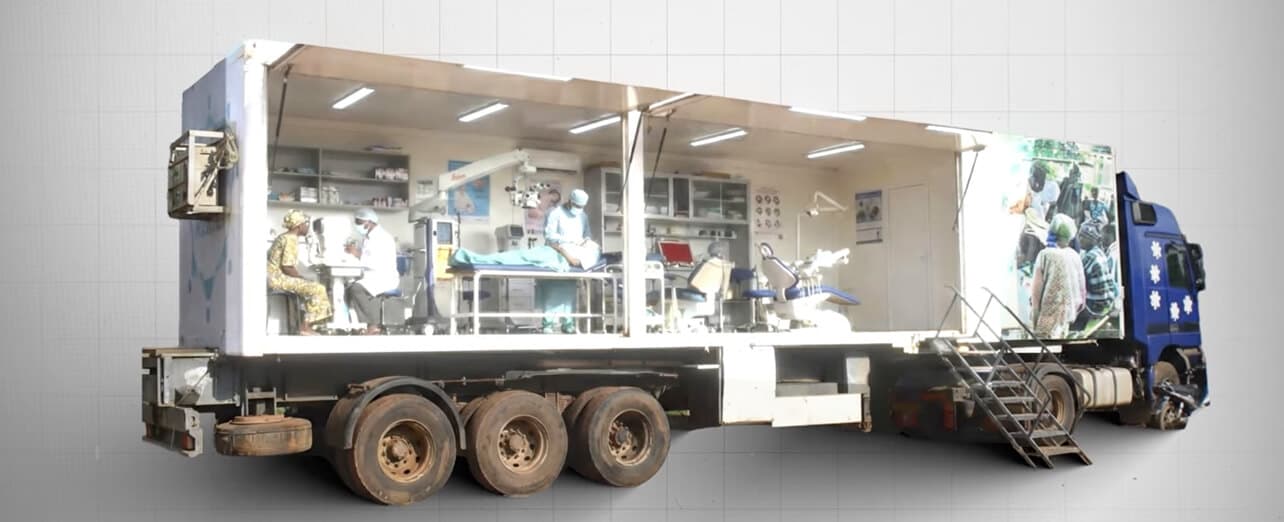
When Alima was only 40 days old, her mother, Founey Coulibaly, noticed something was wrong with her eyes. For nine years the family searched for answers and spent what little they had on treatments that did not help; no one told them Alima had cataracts in both eyes. When Embrace Relief's mobile clinic reached their village, the team identified the cause and scheduled surgery at no cost. Today Alima runs through her village and explores on her own. "Now, she goes wherever she wants," her mother says. Read Alima's story.
Massarna: back to life after losing her sight and her income
Massarna Diarra, a mother and clothes vendor in Mali, kept walking long distances to sell clothes even as cataracts blurred her vision. "Even from three meters away, I could no longer see people's faces," she recalls. Unable to afford the 80,000 FCFA surgery, she suffered several accidents and eventually had to stop working for nine months. Through Embrace Relief's free mobile eye clinic, she received screening, surgery, and follow-up care, and her sight was restored. Read Massarna's story.
Maymuna, 9: from the sidelines back to school
Maymuna lives in Djissoumabougou, a small village about 45 minutes from Bamako. Cataracts took her sight and forced her to leave school; she could hear her friends playing but could not see them. When Embrace Relief's mobile health unit offered examinations in her village, a doctor identified her cataract immediately. Her family had not known that a single operation could restore her vision. She received free surgery at a partner clinic in Bamako. Read Maymuna's story.
Bahima: a teacher returns to the classroom
Bahima Beathé was a teacher in Côte d'Ivoire when his eyesight began to fail, and cataracts eventually forced him to leave the job he loved. Hearing that a partner clinic supported by Embrace Relief in Bamako could operate free of charge, he traveled hundreds of miles for treatment. Surgeons operated on one eye and then the other two weeks later. With his vision restored, Bahima could return to his calling. Read Bahima's story.
Djeneba, 62: independence restored
Djeneba Diallo, a widow in Mali, had cared for herself and her home for years after her husband died, until cataracts made daily tasks difficult and unsafe. She could not afford surgery. At a partner clinic in Bamako, she received a free examination and was told a donor had sponsored her operation. She walked into the operating room with tears of gratitude. Read Djeneba's story.
Mariam, 62: her first visit to a doctor
Mariam Dembele had lived with blurry, discolored vision for years and felt she had become a burden on her family. When Embrace Relief's mobile health clinic came to her area, she saw a doctor for the first time in her life. She returned the next morning for surgery and was finished by noon. Read Mariam's story.
What these stories have in common
Every patient in these stories had a treatable condition and no way to reach treatment. The barriers were the same: the cost of surgery, the distance to an eye surgeon, and, in several cases, not knowing that cataracts can be cured. In an Embrace Relief community survey, 57% of people in Mali did not know cataracts are curable. Mali needs about 80,000 cataract surgeries a year but performs fewer than 10,000, so for every story here, many more people are still waiting. Learn what a $120 sponsorship covers and why so many people go blind in low-income countries.
Sources
- Embrace Relief, Cure Cataract program — /cure-cataract
- Embrace Relief, Free Cataract Surgery in Africa (community survey) — /blog/how-to-sponsor-a-free-cataract-surgery-in-africa
Frequently asked questions
How long does cataract surgery take?
In Embrace Relief's program, cataract surgery is a short procedure of about 15 minutes. Patients are screened beforehand and receive follow-up care afterward.
Can children have cataracts?
Yes. Although cataracts are most common in older adults, children can be born with cataracts or develop them early. Ten-year-old Alima lived with cataracts in both eyes for nine years before surgery restored her sight.
How can I sponsor a surgery for someone like these patients?
Through Embrace Relief, $120 sponsors one cataract surgery in rural Mali at no cost to the patient. You can also dedicate a surgery in honor of a loved one.