How Much Does Cataract Surgery Cost in Africa?
In rural Mali, $120 sponsors a free cataract surgery through Embrace Relief. See what the gift covers, how it compares to US costs, and how to give.
By Embrace Relief Team · Updated October 9, 2026
The useful part before the long read.
Through Embrace Relief, $120 sponsors one cataract surgery in rural Mali at no cost to the patient; $240 sponsors two and $600 sponsors five.
The sponsorship supports a full cycle of care: community awareness, screening of about 15 people, one surgery, and follow-up care.
Without insurance in the US, cataract surgery commonly costs several thousand dollars per eye; consumer health guides cite a range of roughly $3,000 to $7,000.
Mali needs about 80,000 cataract surgeries a year but performs fewer than 10,000, and 1 in 2 people worldwide who need the surgery cannot access it (WHO).
In rural Mali, a $120 gift to Embrace Relief sponsors one cataract surgery, and the patient pays nothing. That is a small fraction of what the same operation typically costs an uninsured patient in the United States. This guide explains what the $120 sponsorship covers, why cataract surgery remains out of reach for so many people in Africa, and how you can sponsor a surgery.
How much does cataract surgery cost in Africa?
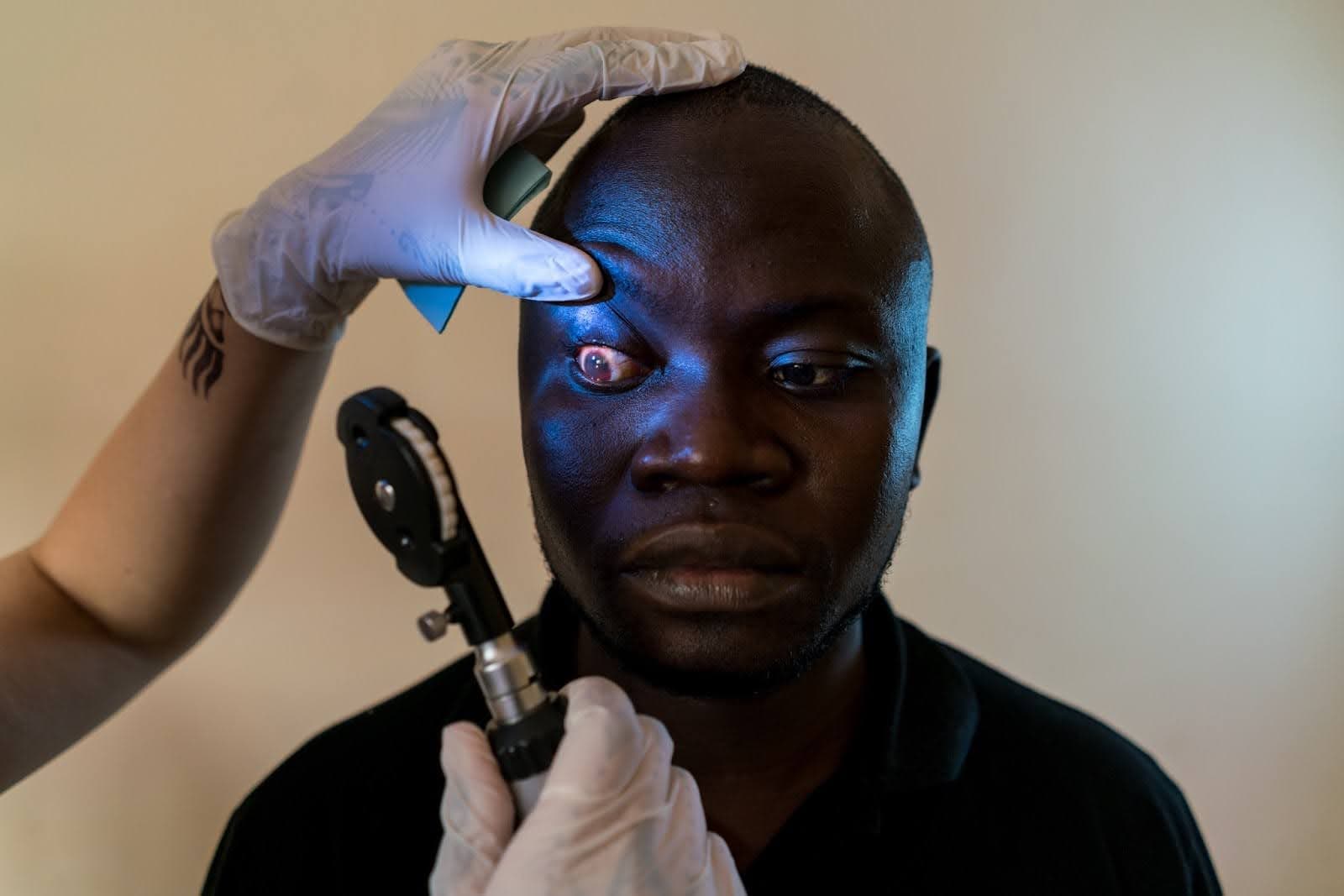
The price of cataract surgery in Africa varies widely by country, facility, and lens type, and for many rural families even a modest fee, transport, and lost work days make surgery unaffordable. Embrace Relief removes that cost for the patient. In its Cure Cataract program in rural Mali, a donor's $120 sponsors one cataract surgery delivered through a mobile eye clinic, at no cost to the patient. The patient receives screening, surgery to replace the clouded lens with an artificial intraocular lens (IOL), and follow-up care in or near their own community. Donors can give once or monthly: a recurring $120 a month sponsors one surgery every month. Because the clinic travels to villages, patients avoid long trips to distant hospitals, which is often the barrier that keeps people from treatment in the first place.
What does a $120 sponsorship cover?
| Stage of care | What happens |
|---|---|
| Awareness and outreach | Community meetings, radio, and village visits explain that cataract blindness can be treated safely. |
| Screening | Mobile teams examine patients (about 15 people per sponsorship) and confirm who needs surgery. |
| Surgery | The cloudy lens is removed and replaced with a clear artificial lens, in a short procedure of about 15 minutes. |
| Follow-up care | Post-operative checks, eye drops, and recovery guidance help the eye heal well. |
Sponsorship options
| Gift | Impact |
|---|---|
| $120 one-time | Sponsors one cataract surgery in rural Mali |
| $240 one-time | Sponsors two cataract surgeries |
| $600 one-time | Sponsors five cataract surgeries |
| $120 per month | Sponsors one surgery every month |
| Dedication | Sponsor a surgery in honor of a loved one and receive a certificate of sponsorship |
How does the cost compare with cataract surgery in the US?
In the United States, cataract surgery without insurance commonly costs several thousand dollars per eye. Consumer health guides such as GoodRx and Medical News Today report a typical range of roughly $3,000 to $7,000 per eye, with higher prices for laser-assisted surgery and premium lenses. The US price includes surgeon and facility fees, anesthesia, pre-operative testing, and the lens itself. Embrace Relief's $120 sponsorship is a donor contribution to a nonprofit program in Mali, not a market price, so the two figures are not directly comparable. What the comparison does show is how far a donation can go: for patients in rural Mali, the surgery is free. For US costs and insurance options, see How Much Does Cataract Surgery Cost Without Insurance?
Why do so many people in Africa still go without cataract surgery?
Cataract surgery is one of the most effective procedures in medicine, yet WHO reports that 1 in 2 people worldwide who need it cannot access it, and distance vision impairment is about four times more common in low- and middle-income regions. In Mali, about 80,000 cataract surgeries are needed every year, but fewer than 10,000 are performed. Three barriers keep the gap open: cost, distance to eye care, and awareness. In an Embrace Relief community survey, 57% of people in Mali did not know that cataracts can be cured; many believed blindness was simply part of aging. When a parent or grandparent loses their sight, the effects reach the whole family: adults can lose their income, and children may leave school to help at home.
Is cataract surgery safe and effective?
Cataract surgery is a common, well-established procedure. Surgery is the only definitive treatment for cataract-related vision loss: the clouded lens is removed and replaced with an artificial one. In Embrace Relief's Mali program, 96% of patients regained vision after surgery and 98% reported being satisfied with their care. Results depend on each patient's eye health, which is why screening and follow-up visits are built into every sponsored surgery.
Stories from the mobile eye clinic
Massarna was 43 when cataracts in both eyes made everyday life a struggle. After free surgery through Embrace Relief, she can see clearly again. Dedem, an elderly man in rural Mali, had lived for years depending on others as his sight faded; surgery gave him back his independence. Watch their stories on the Cure Cataract page.
Sources
- Embrace Relief, Cure Cataract program — Read source
- WHO, Blindness and vision impairment fact sheet (10 February 2026) — Read source
- Embrace Relief, Free Cataract Surgery in Africa (community survey) — Read source
- GoodRx, How Much Does the Average Cataract Surgery Cost? — Read source
- Medical News Today, Cost of cataract surgery — Read source
Frequently asked questions
Is the surgery free for the patient?
Yes. In Embrace Relief's Cure Cataract program in rural Mali, donors sponsor the surgery and patients pay nothing.
How long does cataract surgery take?
In Embrace Relief's program, cataract surgery is a short procedure of about 15 minutes. Screening beforehand and follow-up care afterward are part of every sponsored surgery.
Where does Embrace Relief perform cataract surgeries?
The current Cure Cataract campaign runs a mobile eye clinic in rural Mali, including the District of Kolokani.
Can I sponsor a surgery every month?
Yes. A recurring gift of $120 a month sponsors one cataract surgery each month.
Are donations tax-deductible?
Embrace Relief Foundation is a 501(c)(3) nonprofit organization (EIN 26-2393075). Donations are tax-deductible to the extent allowed by law.