3 Key Challenges to Accessing Healthcare in Africa
Sub-Saharan Africa faces three main challenges in healthcare: inadequate human resources, insufficient budgetary allocation, and poor leadership. Solutions include public-private partnerships, increased funding, and workforce training.
The useful part before the long read.
Sub-Saharan Africa faces three main healthcare challenges: inadequate workforce, insufficient budgets, and poor leadership.
Most African countries allocate less than 10% of GDP to healthcare, missing the Abuja Declaration target of 15%.
Corruption and mismanagement divert resources, leading to higher costs and reduced patient satisfaction.
Embrace Relief supports global health security through partnerships, medical supplies, and mobile health clinics.
Introduction to Global Health Challenges
“Global health” has become a popular and widely used phrase to describe a multidisciplinary approach to improving health and equity for all humans. To address global health, researchers, politicians, academics, and public and private sectors must work together to put systems and infrastructure in place to accommodate the rapidly growing population and changing medical needs. However, this task has proven difficult with the failure of current healthcare access and infrastructure, especially in under-developed regions, like most of sub-Saharan Africa.
According to a recent study done by the National Institute of Health, the three main challenges facing healthcare in sub-Saharan Africa are 1) Inadequate human resources (workforce), 2) Inadequate budgetary allocation to health (finances), and 3) Poor leadership and management.
Let’s dive deeper into these critical issues and discuss their implications:
1. Low Healthcare Workforce Participation
For decades, a lack of trained healthcare professionals has put a significant strain on the service and delivery of healthcare. Firstly, there just aren’t enough medical professionals to address all of the needs of the population. For the medical professionals that exist are rarely given training on how to operate and maintain advanced medical technology, leaving equipment to fall into disrepair.
Furthermore, rapid urbanization and population growth have increased medical demand beyond the typically addressed communicable diseases such as AIDS and malaria. Financial, physical, and human resources need to be funneled into addressing emerging noncommunicable diseases such as hypertension, cardiovascular disease, cancer, and diabetes, which are increasingly being found among the African middle class.
2. Inadequate National Health Budgets
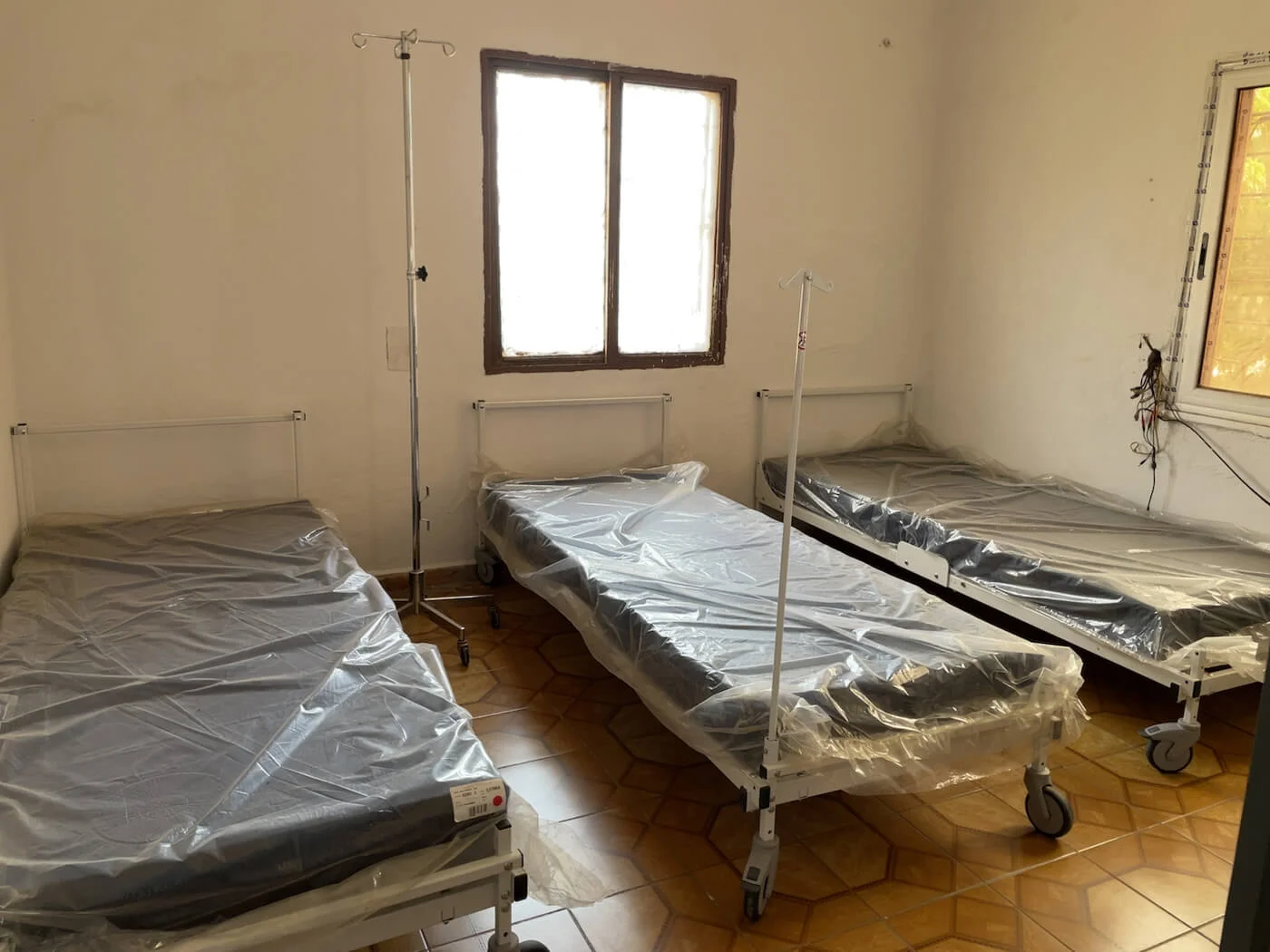
Inadequate financing of health in African countries is a major challenge, although even the wealthiest countries on the continent are finding it difficult to keep up with rising medical costs, especially in the face of global inflation and economic downturns.
Most African countries reportedly allocate less than 10% of their gross domestic product (GDP) to healthcare. With over 429 million people on the continent living in extreme poverty – meaning their income is less than $2.15 per day – investment in healthcare and medical infrastructure remains extremely limited.
On April 27, 2001, the African Union (AU) governments adopted the Abuja Declaration, committing to allocate at least 15% of their national budgets to healthcare improvement. However, a recent analysis of data spanning two decades revealed that by 2021, the most recent year with available data, only two of the AU’s 55 member countries — Cabo Verde and South Africa — had met this target.
3. Poor Leadership and Management
Another pressing issue regarding Africa’s health systems is overall poor leadership and management. Lacking and inefficient resource management, poor integration of healthcare programs, and corruption have significantly impacted all levels of healthcare access.
All countries face issues with corruption to some extent; however, for healthcare professionals living near the poverty line in less socio-economically advanced countries, the promise of enriching oneself through corrupt means is tempting. In health systems, this can take the form of medical staff selling drugs that should be free, theft for personal use, accepting bribes to approve untested drugs, or diversion of medicines, supplies, and equipment. These activities divert financial and physical resources away from health care delivery, directly impacting patient services and outcomes.
The implications of these are that poor leadership could lead to increased healthcare costs, reduced efficiency and effectiveness, dissatisfaction among staff and ultimately resulting in lower patient satisfaction and poor health outcomes
Solutions and Embrace Relief’s Impact
Africa’s underdeveloped healthcare systems require bold and innovative approaches to overcome the current challenges in service delivery. Leading solutions, according to the National Health Institute, include training and capacity building for health workers, increase budgetary allocation to health, and advocacy for political support and commitment. Addressing issues related to human resources, budget allocation, and management is crucial, as these areas hold the key to achieving improved health outcomes and should be given the highest priority.
Embrace Relief actively addresses global health inequality in regions like sub-Saharan Africa, where health and medical infrastructure and services are scarce. We achieve this mission through multi-sectoral partnerships to provide financial and physical support to clinics and hospitals, facilitate the acquisition of medical supplies and equipment, and distribute essential medicines like anti-inflammatories and antibiotics, which can significantly curb deadly outcomes.
However, to address such an undertaking, creative and innovative solutions are necessary , such as Embrace Relief’s Mobile Health Clinics, which bring free health and medical services to communities in the most remote regions of the world.
By donating to Embrace Relief’s Health program, you will directly contribute to building and securing global health and equity for all! Make a gift: $25, $50, $100, or $750.