
Cure Cataracts in Mali: One Year of Life-Changing Impact in 2025
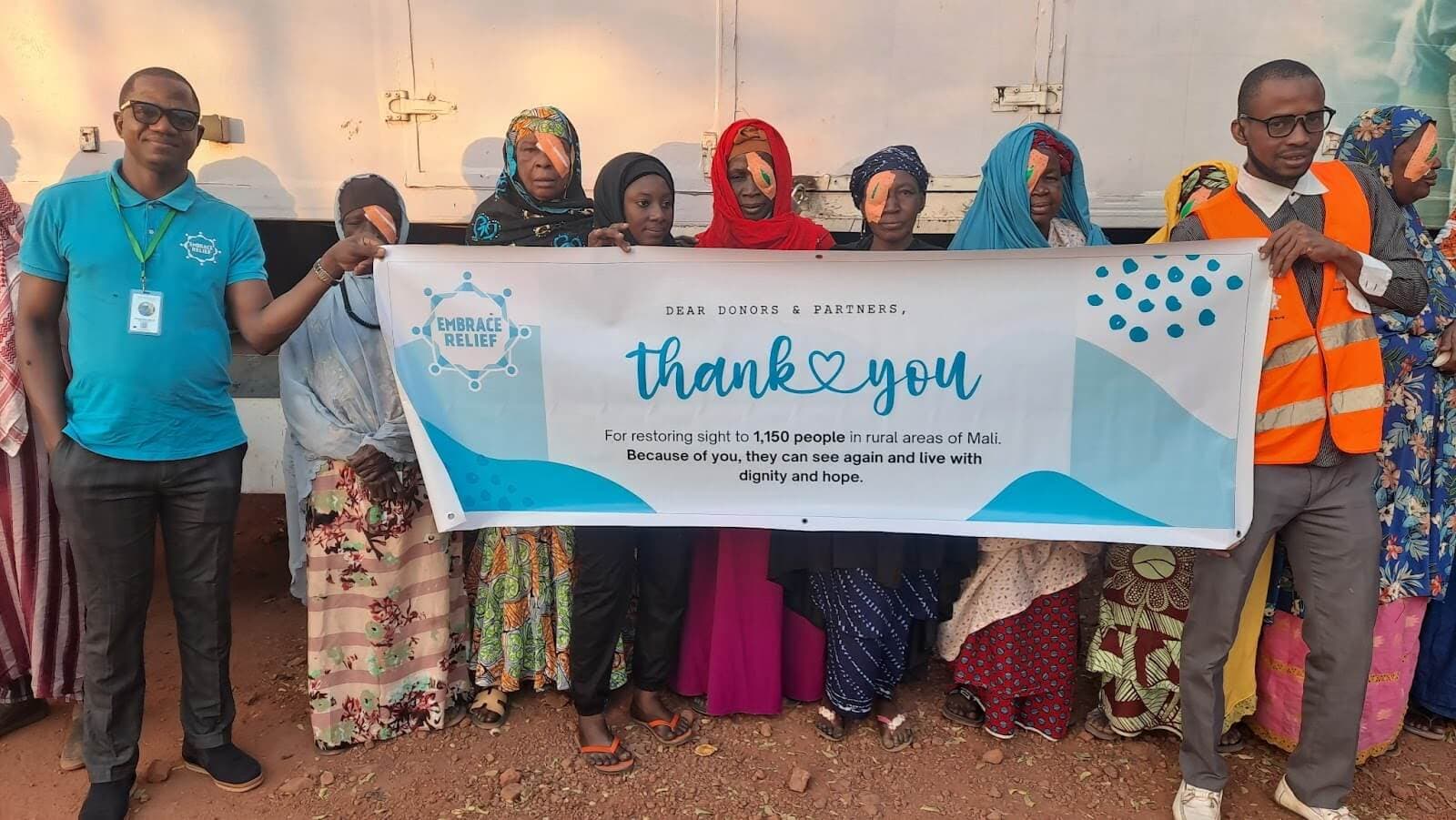
In 2025, Embrace Relief performed 1,150 free cataract surgeries in Mali, restoring sight and independence to vulnerable populations with a 96.3% vision improvement rate.
The useful part before the long read.
1,150 free cataract surgeries were performed in Mali in 2025, restoring sight to vulnerable patients.
The program achieved a 96.3% vision improvement rate, exceeding WHO quality standards.
4,219 people were screened across 20 rural and urban locations using a mobile clinic model.
96% of patients returned to work and 93% regained independence within 30 days of surgery.
The Urgent Need for Cataract Care in Mali
Cataracts are one of the leading causes of preventable blindness worldwide,and in Mali, they account for nearly 48% of all blindness cases. While cataract blindness can be cured through a simple surgical procedure, thousands of people across Mali continue to live in darkness due to poverty, distance, and lack of access to eye care.
In 2025, Embrace Relief launched a large-scale Free Cataract Screening and Surgery Program in Mali, marking a major step toward eliminating avoidable blindness in one of Africa’s most underserved countries. This blog highlights the results, impact, and lessons learned from one full year of cataract interventions.
Mali faces one of the highest burdens of blindness in Africa. Rural poverty, limited health infrastructure, and a severe shortage of ophthalmologists leave most cataract patients untreated.
While international health guidelines recommend 3,000–5,000 cataract surgeries per million people per year, Mali’s cataract surgery rate remains below 1,000, and more than half of people with operable cataracts receive no treatment at all.
Recognizing this urgent gap, Embrace Relief launched its cataract program in February 2025, alongside the establishment of its official country office in Mali. The program was designed to deliver free, accessible, and high-quality eye care to elderly individuals, women, and low-income households—particularly in rural and hard-to-reach communities.
2025 Program Goals and Methodology
The program had two clear objectives for 2025:
- Provide 3,600 free eye screenings to detect cataracts and other visual impairments
- Perform 1,200 free cataract surgeries by December 2025
To achieve this, Embrace Relief implemented a monthly mobile clinic model, delivering approximately 400 consultations and 140 surgeries per month across multiple regions.
One Year of Results: Cataract Program Impact in 2025
Between April and December 2025, the cataract program achieved exceptional results, meeting or exceeding nearly all targets:
- 36 screening sessions conducted (100% of target)
- 4,219 patients screened (117% of target)
- 1,172 cataract cases diagnosed (97.7% of target)
- 1,150 successful cataract surgeries performed (95.8% of target)
- 96.3% of patients reported improved vision after surgery
Services were delivered across 20 rural and urban locations, demonstrating the effectiveness of Embrace Relief’s mobile clinic approach in expanding access to eye care.
Reaching the Most Vulnerable Populations
Socio-economic surveys confirmed that the program successfully reached those most affected by poverty and exclusion:
- 76.5% of patients had no formal education
- 73% had unstable incomes
- 91% lacked health insurance
- 46% were unaware that cataracts are treatable
Nearly 70% of patients were living with severe vision loss or complete blindness before surgery, and over half had endured blindness for more than one year. Without mobile outreach, 73% reported they would not have accessed care at all.
These findings confirm that financial hardship and distance—not willingness,are the main barriers to cataract treatment in Mali.
Quality of Care and Surgical Outcomes
Post-operative results were assessed against WHO cataract surgery quality standards:
- 87% achieved good visual acuity (≥ 6/18), exceeding the WHO minimum standard of 80%
- 96% experienced improved vision
- 88% reported no post-operative complications
- 97.8% of patients were satisfied with their care
A small percentage experienced poor outcomes due to advanced disease or co-existing eye conditions, highlighting the need for earlier detection and improved refraction services. Future investments in biometric lens selection and refraction equipment are expected to further improve outcomes.
Impact Beyond Vision: Independence, Work, and Dignity
Restoring sight transformed lives far beyond medical outcomes:
- 96% of patients returned to work
- 93% regained independence within 30 days
- 83% reported significant improvement in emotional well-being
Before surgery, 42% were fully dependent on others, and 21% struggled to move safely. After surgery, most patients resumed daily activities, regained livelihoods, and reconnected with their communities.
Looking Ahead: Cataract Care in 2026
In 2026, Embrace Relief Foundation plans to:
- Deliver 1,800 cataract surgeries (150 per month)
- Expand mobile outreach
- Invest in clinical equipment and quality improvement
- Construct a rural medical health center
- Provide free medical care to internally displaced populations
The 2025 cataract program demonstrates that preventable blindness can be eliminated when care is free, mobile, and community-based. Through donor-supported cataract surgery, Embrace Relief,restored sight, independence, and dignity to over a thousand people in Mali,many of whom had lost hope of ever seeing again.
With continued support, this proven model can reach even more people and bring Mali closer to a future free from avoidable blindness.