Facts you need to know about Clean Water
Over 2 billion people worldwide lack access to safe drinking water, leading to preventable diseases and economic hardship. Embrace Relief addresses this crisis by building deep water wells in sub-Saharan Africa.
The useful part before the long read.
2.2 billion people globally lack access to safely managed drinking water services.
Diarrheal disease is the second-leading cause of death among children under five worldwide.
Women and girls in sub-Saharan Africa spend an estimated 40 billion hours annually fetching water.
Embrace Relief has built 450 new wells and reconstructed 50, providing clean water to over 500,000 people.
The Global Clean Water Crisis
Water is an essential resource when it comes to meeting the needs of individuals and society. Clean drinking water is a human right and the basis of a healthy life, and access to clean water is the foundation for the systems of sanitation and hygiene that prevent countless diseases around the world.
But what happens when people lack access to nearby clean drinking water? This is the situation that 2.2 billion people worldwide currently face, according to a 2019 study by the World Health Organization. That’s nearly one-third of the world’s population who lack access to safely managed drinking water services – that is, uncontaminated water that is both available and easily accessible when it’s needed. Even more people lack water for basic hygiene and sanitation.
All of this results in preventable sickness and death, especially in areas of the globe already caught in cycles of poverty and underdevelopment. Let’s take a look at some of the water statistics that tell the story of the crisis:
Clean Water Statistics
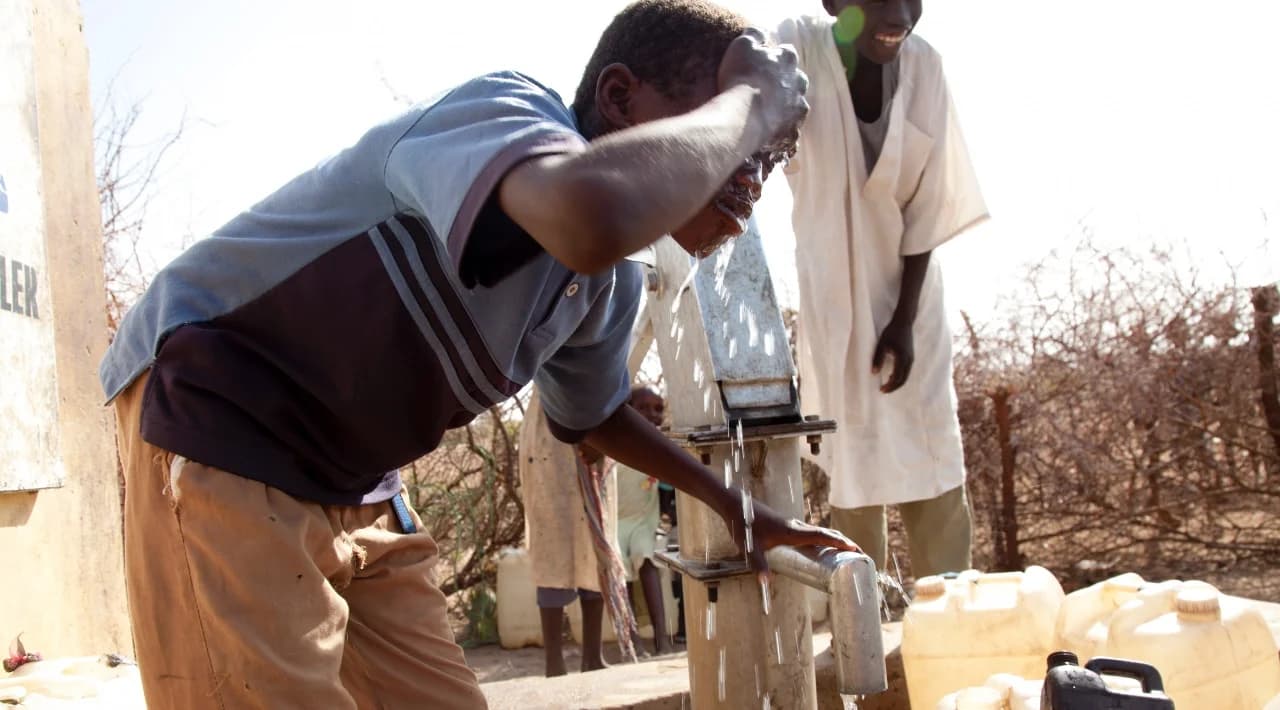
Embrace Relief’s Clean Water Initiative aims to reduce the suffering of people in sub-Saharan Africa by building safe, deep water wells in the region, where a substantial amount of underground clean water can be accessed. Additionally, our “Fountains of Hope” project expands this mission to the reconstruction of non-operational wells.
With your help, Embrace Relief has built 450 new water wells and reconstructed 50 pre-existing ones primarily in the central African nations of Cameroon, Chad and Nigeria, providing more than 500,000 people with clean water for at least the next five years.
- More than 785 million people worldwide lack access to basic water services – water that can be collected within 30 minutes and is free from contamination either through natural (protected springs and rainwater) or man-made (pipes, wells) means. Of these, 144 million people depend solely on surface water (lakes, rivers, ponds) susceptible to contamination.
- WHO data finds that 3 billion people lack basic hand washing facilities with soap and water at home, including 75 percent of the population of the world’s least developed countries, and 4.2 billion people lack safely managed sanitation.
- The lack of available sanitation in many parts of the world has a huge impact on the food supply as well: it is estimated that 10 percent of the world’s population consumes food that has been irrigated by water polluted with waste.
- Preventable health issues and deaths are the most visible consequence of contaminated water. The WHO found that 1.87 million people died in 2016 of causes attributable to a lack of access to clean drinking water, sanitation and hygiene. Diseases caused by drinking contaminated water, most notably diarrhea, were responsible for nearly half that total. Diarrhea is the second-leading cause of death among children under the age of 5 worldwide; on average, a child dies of a water-related disease every minute.
- Beyond the risk of death from waterborne diseases, people without clean water are at increased risk of debilitating illnesses and health conditions. Contaminated water and poor sanitation are linked to the transmission of diseases such as cholera, dysentery, hepatitis A, typhoid and polio, as well as sickness caused by parasites that affect millions. These conditions result in shorter lifespans, massive healthcare costs and significant economic disruptions.
- Compounding the issue, one in four healthcare facilities lack basic water service and more people die from unsafe care than a lack of care.
- An estimated 40 billion hours are spent annually on water procurement every year. In parts of the world like sub-Saharan Africa, roughly 90 percent of women and girls fetch water daily from distant sources, exposing themselves to dangerous journeys and inhibiting their ability to receive adequate education and contribute to their local economy.
Embrace Relief’s Approach
By donating to Embrace Relief’s Clean Water fund, you can help us build even more of these critical sources of clean water that will benefit thousands of people for years to come. You can also start and raise funds for your own clean water well project.
Please donate today and help us get clean water to people who need it! You can make a massive impact on thousands of lives with just one click.