Is my tap water safe to drink?
Most Americans receive safe tap water from public utilities regulated by the EPA, but understanding treatment processes and Consumer Confidence Reports helps ensure quality. Meanwhile, Embrace Relief works to provide clean water access to millions globally through well-building initiatives.
The useful part before the long read.
Around 80% of the U.S. population receives drinking water from public utilities that follow strict EPA safety standards.
Water treatment involves coagulation, sedimentation, filtration, disinfection, and pH adjustment to remove contaminants.
Residents can check their local water quality and contaminant levels via the annual Consumer Confidence Report (CCR).
Embrace Relief has built over 950 wells, providing clean water to 1 million people in Africa, with donations supporting new projects.
Understanding Public Water Systems
If you pay a water bill each month, or you live in an apartment building that pays a monthly fee to a water utility, then you are drinking from a public water system. In most urban and suburban areas of the United States, tap water is generally safe to drink because it is supplied by municipal water systems that follow strict treatment and monitoring protocols. Water is drawn from sources like lakes, rivers, or underground aquifers, then treated to remove contaminants before it reaches your home. But how does this process work, and how can you make sure your tap water is safe?
The Water Treatment Process
The typical water treatment process in U.S. cities involves several key steps:
- Coagulation and Flocculation: Chemicals are added to the water, causing dirt, silt, and bacteria to clump together into larger particles called floc.
- Sedimentation: These clumps settle to the bottom of a tank, where they are removed.
- Filtration: The water then passes through layers of sand, gravel, or other materials to remove remaining particles, bacteria, and viruses.
- Disinfection: A disinfectant, usually chlorine or chloramine, is added to kill any remaining microorganisms. Some systems use alternatives like UV light or ozone for disinfection.
- pH Adjustment: In some cases, the pH of the water is adjusted to prevent corrosion of pipes, which helps reduce the risk of lead or copper contamination.
After these steps, the water is sent through pipes to homes, schools, and businesses. Because of the steps taken by local water utilities and the standards set by the U.S. Environmental Protection Agency, you can be assured that, barring severe disruptions, the tap water from your nearest faucet is safe to drink.
U.S. Water Safety Standards and Regulations
The Environmental Protection Agency (EPA) regulates public water systems in the U.S. under the Safe Drinking Water Act (SDWA). These systems must meet strict limits on contaminants like bacteria, lead, and nitrates. Water utilities are required to test their water regularly and report the results. If contaminant levels exceed safe limits, they must take corrective action and notify the public.
The EPA’s oversight ensures that most tap water in urban and suburban areas is safe to drink. However, problems can arise, especially in areas with aging infrastructure or environmental contamination. The lead crisis in Flint, Michigan, is an example of how improper treatment and old pipes can result in unsafe drinking water. The ongoing replacement of water pipes in Flint highlights the importance of constant monitoring of water sources to keep the public safe.
Checking Your Water Quality with Consumer Confidence Reports
To help residents stay informed about the safety of their water, the EPA requires public water systems to provide an annual Consumer Confidence Report (CCR), also known as a water quality report. These reports are typically distributed in July and provide detailed information about the water supply in your area. You can use this link to find the report for the public water source closest to you.
Here’s what you can find in a CCR:
- Source of your water: The report will tell you where your water comes from—whether it’s surface water (rivers or lakes) or groundwater (wells or aquifers).
- Contaminants detected: It will list any contaminants found in your water, their levels, and how they compare to EPA standards.
- Health Information: If certain contaminants pose risks to vulnerable groups like the elderly, infants, or immunocompromised individuals, the report will include warnings.
The EPA website linked above includes reports for water systems from across the country. You can also request copies of CCRs directly from your local water utility.
Addressing Concerns About Tap Water
If you have concerns about the safety of your tap water, the first thing you should do is check your Consumer Confidence Report. This will give you an overview of the quality of the water in your area.
Occasionally, you may notice that your tap water has the odor of chlorine, gasoline, sulfur, or metal; or that your water is cloudy or discolored. This could indicate the presence of a contaminant, but is not necessarily confirmation that your water is unsafe to drink. You should contact your local water utility to receive guidance tailored to your situation.
Some chemicals, such as lead, do not leave an obvious trace of contamination in your water. And lead is more common in homes built prior to 1988 with outdated plumbing. You can consider purchasing a home testing kit (available at most “home and hardware” retailers) to check your water for lead; alternatively, many states and water utilities offer lead testing as a service. Contact your local authority for more information.
While tap water in most U.S. cities and suburbs is safe and closely monitored, being informed about the quality of your water can help you stay proactive and address any concerns if they arise.
Global Clean Water Initiatives with Embrace Relief
Clean water is a human right. And while the U.S. has a robust system of ensuring water quality and safety, this is not the case everywhere. In fact, more than 800 million people worldwide live without access to a clean, safe source of drinking water.
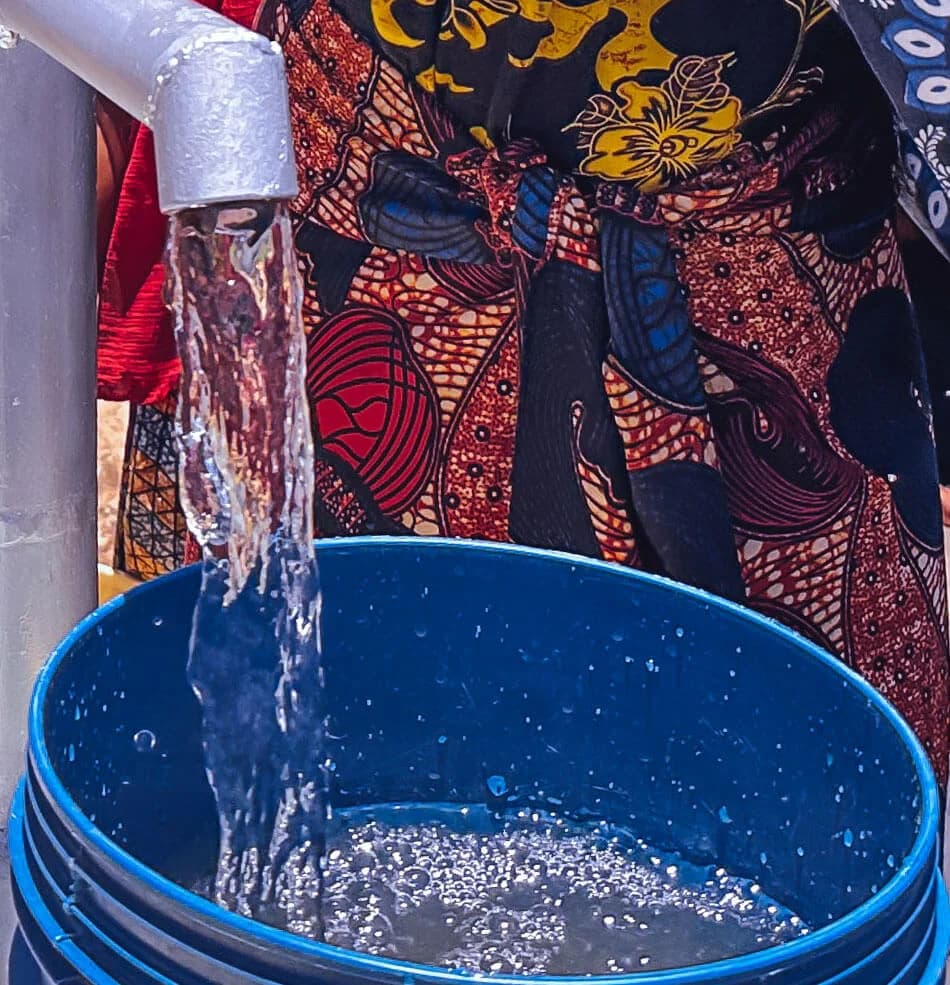
Embrace Relief is building a solution for many communities affected by water scarcity, especially in Africa. That solution? The building of water wells which are dug deep into the ground, where contaminants cannot reach the water supply. By installing filtered pipes that bring the water to the surface with the use of a simple hand pump, Embrace Relief can ensure that an entire community has access to high-quality drinking water at all times.
To date, we’ve built more than 950 water wells, providing clean water to 1 million people across six African countries! But we can’t keep making this critical impact without your support.
Donate today to Embrace Relief’s Clean Water Initiative using the donation box below, and help change entire communities for the better. Every dollar counts, but for a donation of $3,500, you can cover the cost of one entire water well, which also entitles you to give that well a name of your choosing. It’s the perfect way to leave a legacy for yourself, your family, your community group or your company – while also making a real positive change in the world!