What Does Haram Mean in Islam?
Haram means 'forbidden' in Islam. See the five rulings, examples in food, money and conduct, how it differs from halal, and when necessity applies.
By Embrace Relief Team · Updated October 14, 2026
The useful part before the long read.
Haram means "forbidden"; halal means "permissible." Most scholars hold that things are permissible by default unless a clear text prohibits them.
Islamic jurists describe five rulings: obligatory, recommended, permissible, disliked, and forbidden. Haram is the strongest prohibition.
Well-known examples include pork, intoxicants, interest (riba), gambling, theft, lying, and harming others.
Necessity can change a ruling: the Qur'an (2:173) says a person compelled by necessity, neither desiring it nor exceeding the need, is not sinful.
For personal or complicated questions, ask a qualified scholar. This guide is general education, not a fatwa.
Haram (Arabic ḥarām) means "forbidden" in Islam: an action, food, or dealing that the Qur'an or the Sunnah prohibits. It is the opposite of halal, which means "permissible." This guide explains what haram means, how Islamic law ranks actions from obligatory to forbidden, common examples, when necessity changes the ruling, and how to avoid what is haram.
What does haram mean in Islam?
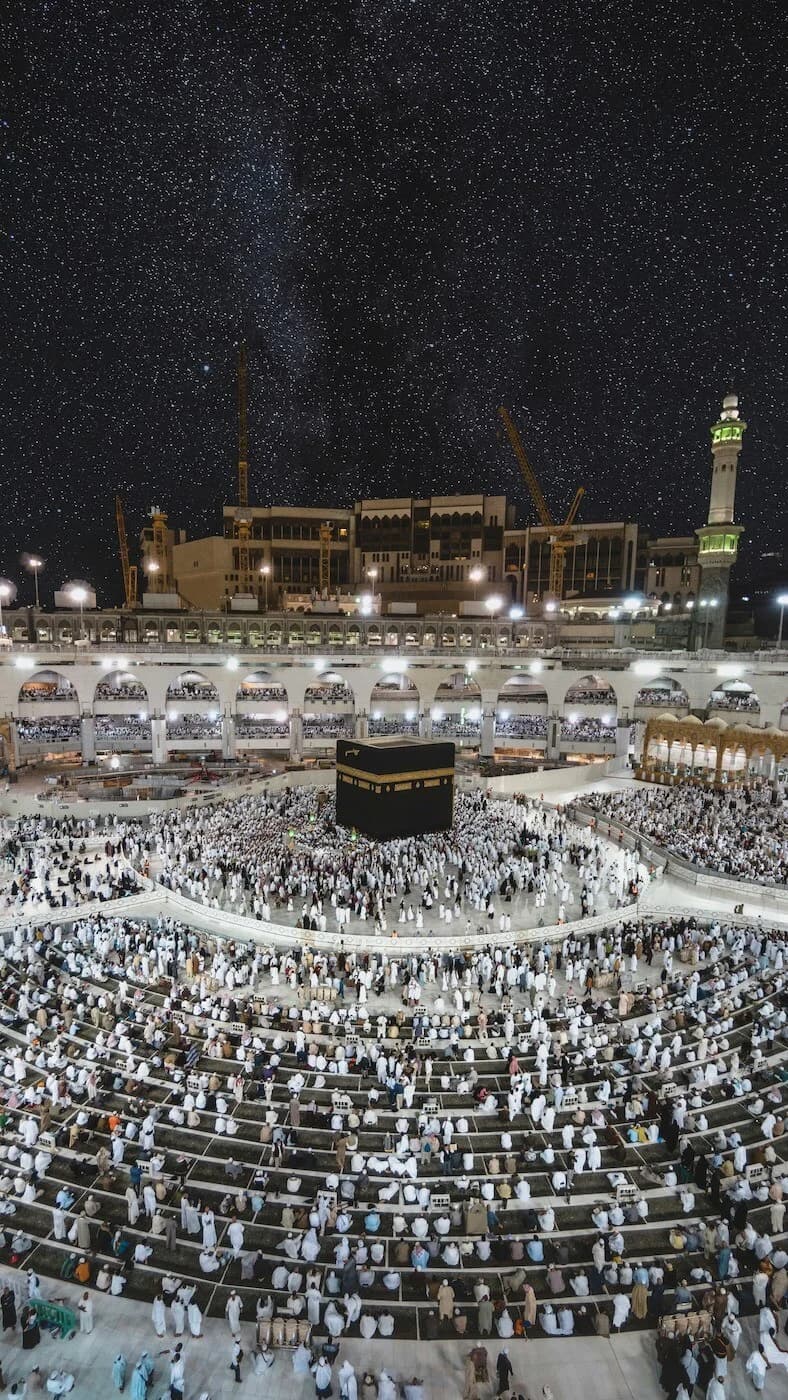
The word comes from the Arabic root ḥ-r-m, which carries the ideas of "forbidden" and "sacred, inviolable." The same root gives the name Al-Masjid al-Haram, the Sacred Mosque in Makkah. In Islamic law (sharia), haram describes what has been prohibited decisively, and doing it knowingly is considered sinful. The Qur'an and the Sunnah are the primary sources for what is haram, and scholars apply those texts to new situations through established methods of legal reasoning. Where qualified scholars differ on a question, this guide says so.
The five rulings in Islamic law: where haram fits
Islam does not divide life into only "halal" and "haram." Most jurists describe five categories of rulings for human actions:
| Ruling | Arabic | Meaning | Example |
|---|---|---|---|
| Obligatory | Fard / wajib | Rewarded for doing, sinful to neglect | The five daily prayers |
| Recommended | Mustahabb / sunnah | Rewarded for doing, no sin in leaving | Voluntary charity (sadaqah) |
| Permissible | Mubah | Neither rewarded nor sinful | Most ordinary foods and daily choices |
| Disliked | Makruh | Better to avoid, but not sinful | Matters scholars discourage without prohibiting |
| Forbidden | Haram | Sinful to do, rewarded for avoiding for Allah's sake | Theft, riba, intoxicants |
The Hanafi school distinguishes fard from wajib, and degrees of makruh, more finely than the table shows, so you may see slightly different wording from different teachers. Most scholars also hold that the default ruling for things is permissibility unless a clear text says otherwise, which is why the haram list is specific rather than open-ended.
Examples of haram in Islam
Food and drink
- Pork and its derivatives. The Qur'an lists carrion, blood, and swine as forbidden (2:173).
- Intoxicants. Alcohol and other intoxicating substances are prohibited (5:90).
- Meat offered in the name of other than Allah, and animals that were not slaughtered according to Islamic guidelines (2:173).
To learn which foods are permitted and how halal slaughter works, read What Does Halal Mean? Foods That Are Halal.
Money and transactions
- Riba (interest or usury). The Qur'an strongly warns against consuming interest (2:275).
- Gambling (maisir) is grouped with intoxicants as something to avoid (5:90).
- Taking others' wealth unjustly, including bribery and fraud (2:188).
Modern financial products can raise difficult questions. Scholars hold different positions on some of them, so a qualified Islamic finance scholar is the right person to ask.
Conduct toward others
- Theft, lying, and dishonesty.
- Backbiting and slander.
- Adultery and fornication.
- Violence, oppression, and injustice, including harming others or harming one's own body with drugs.
Clothing and adornment
Islamic teaching sets guidelines for modesty. Most scholars also hold that pure silk and gold jewelry are not permitted for men, while permitting them for women. Details differ between schools and cultures.
When can something haram become permitted?
Islamic law recognizes necessity (ḍarūra). After listing the forbidden foods, the Qur'an says that whoever is compelled by necessity, neither desiring it nor exceeding the immediate need, is not sinful (2:173). Scholars apply this principle in cases such as life-threatening hunger or certain medical situations. The conditions are strict, and each case is judged individually. If you face a real situation like this, ask a qualified scholar rather than relying on a general article.
Knowledge and intention also matter. The Qur'an says there is no blame for honest mistakes, only for what the heart intends (33:5). Someone who eats something haram unknowingly is not in the same position as someone who does so deliberately.
What about doubtful matters?
Between the clearly halal and the clearly haram are things whose status is uncertain, for example an ingredient whose source is unclear. Many scholars advise caution in such cases: check the source, read the label, and ask. For food, the halal ingredient checklist shows which additives people most often ask about.
How to avoid haram
- 1Seek knowledge. Learn from the Qur'an, authentic hadith, and reliable scholarly works.
- 2Ask scholars. If you are unsure about a specific matter, consult a knowledgeable and trustworthy scholar.
- 3Check before you consume or sign. Read ingredient labels, ask about sourcing, and read the terms of any financial agreement.
- 4Reflect on your daily choices. Intention (niyyah) shapes how an action is judged.
- 5Keep supportive company. A community that encourages good habits makes them easier to keep.
Halal and haram in your wealth: where zakat fits
Islam treats wealth as a trust, and zakat is the annual obligation that purifies and shares it. The Qur'an describes charity taken from wealth as a means of purification (9:103). Zakat is generally 2.5% of your net zakatable assets. If your assets are complex, such as business holdings or investments, consult a scholar about how to calculate it. You can estimate your amount with Embrace Relief's Zakat calculator and learn more in What Is Zakat in Islam? and How to Calculate Your Zakat.
During Ramadan 2025-26, Embrace Relief's Ramadan food packages reached 176,000 people in 22 countries (Embrace Relief Ramadan page). You can calculate and give your zakat in one place on our Zakat page.
Frequently asked questions
What does haram mean in Islam?
Haram means "forbidden" in Islam. It describes actions, foods, and dealings that the Qur'an or the Sunnah prohibits, and it is the opposite of halal, which means "permissible."
What are examples of haram?
Common examples include pork, alcohol and other intoxicants, interest (riba), gambling, theft, lying, backbiting, and harming others. Scholars may differ on details in some modern cases.
What is the difference between haram and makruh?
Haram is forbidden and sinful to do. Makruh is disliked: it is better to avoid, but doing it is not considered sinful. Some schools, such as the Hanafi school, make finer distinctions between degrees of each.
Can haram ever become permissible?
Islamic law recognizes necessity. The Qur'an (2:173) says a person compelled by necessity, neither desiring it nor exceeding the need, is not sinful. The conditions are strict, so consult a qualified scholar about your situation.
Is haram the same as sinful?
Doing something haram knowingly is considered sinful. Unintentional mistakes are treated differently, because intention and knowledge matter in Islamic law.