
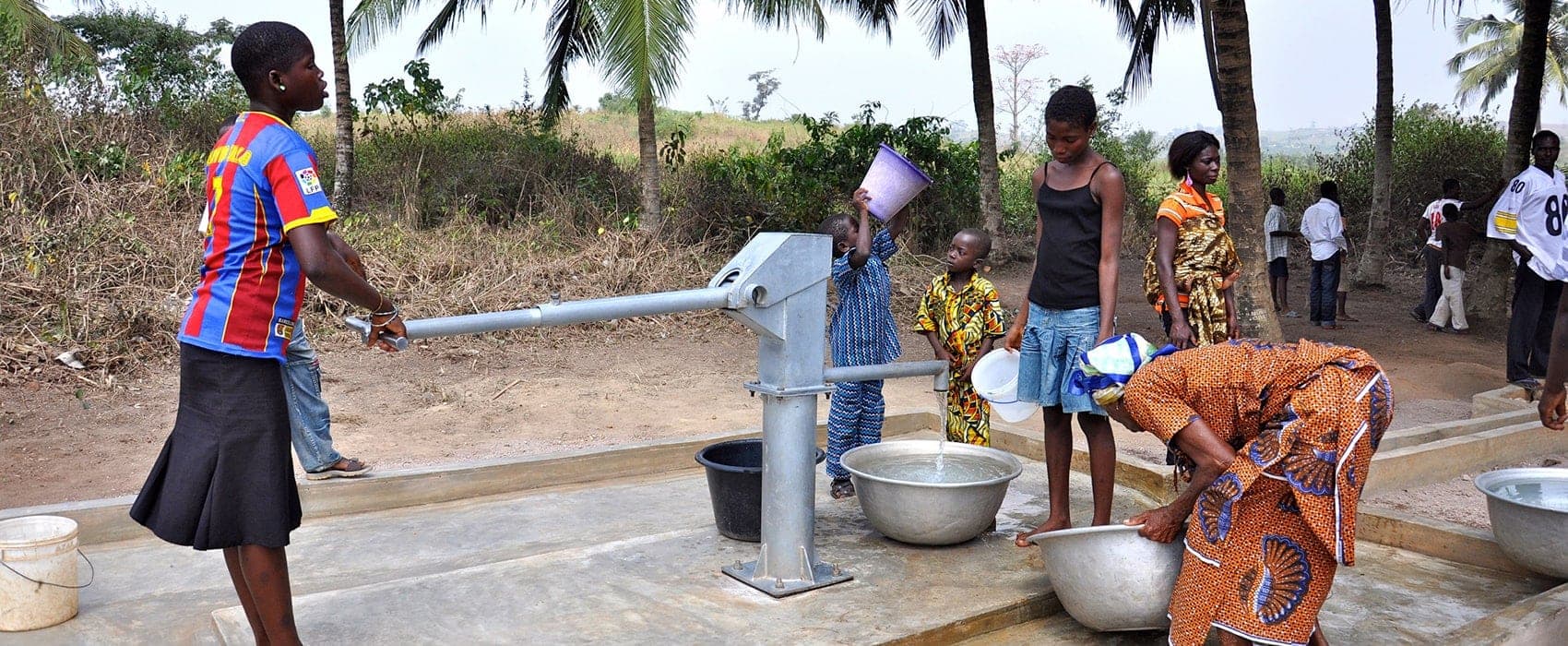
Why Dig Deep Wells?
Shallow wells are susceptible to surface contamination and seasonal droughts. Embrace Relief digs deep wells to 45 meters to ensure safe, high-quality clean water.
The useful part before the long read.
Shallow wells are prone to surface contamination causing diseases like cholera and hepatitis A.
Embrace Relief digs to 45 meters, exceeding the general 30-meter safety standard.
Deeper wells allow more time for bacteria to die off or be trapped by soil and rock.
Deep wells are less affected by seasonal precipitation changes and drought conditions.
The Risks of Shallow Wells
In the short term it may seem more cost effective to cease digging once you reach the water table.
However, shallow wells are susceptible to surface contamination, contributing to diseases such as E. coli, salmonella typhi, Schistosoma, cholera and hepatitis A. This is especially true with wells on the African continent. While 30 meters—or roughly 98.42 feet—is general- ly considered a safe depth, Embrace Relief ensures the best quality water by digging to a depth of 45 meters—or roughly 147.64 feet.
The Science of Deep Well Safety
According to the American Groundwater Trust, increasing the well depth and the length of well casing will result in a longer flow path. The longer the length of time water is in the subsurface, the likelihood that bacteria will die-off or be trapped by soil and rock improves.
In a report compiled by the College of Agriculture and Life Sciences at the University of Arizona, published in February 2011, it was found that the quality of water from shallow wells was in influenced by land uses in the preceding year or two. Groundwater in aquifers moves at a rate of a foot per day or a mile in 16 years. Thus, if a landfill a mile uphill leaks, they discovered, it could take years for the contaminants to reach a deep well.
Aside from contamination, shallow water wells are in influenced by seasonal precipitation. Drought conditions, common to parts of Africa, can drastically lower the water table.