
Water Crisis in Africa: Why is There So Little Clean Water in Africa?
Millions in sub-Saharan Africa spend hours daily collecting unsafe water, leading to illness and poverty. Embrace Relief combats this crisis by building and monitoring water wells to provide sustainable access to clean water.
The useful part before the long read.
Lack of access to clean water in Africa leads to waterborne illnesses, lost education time, and extreme poverty.
Key causes include physical scarcity, lack of economic infrastructure, social inequalities, and natural disasters like droughts.
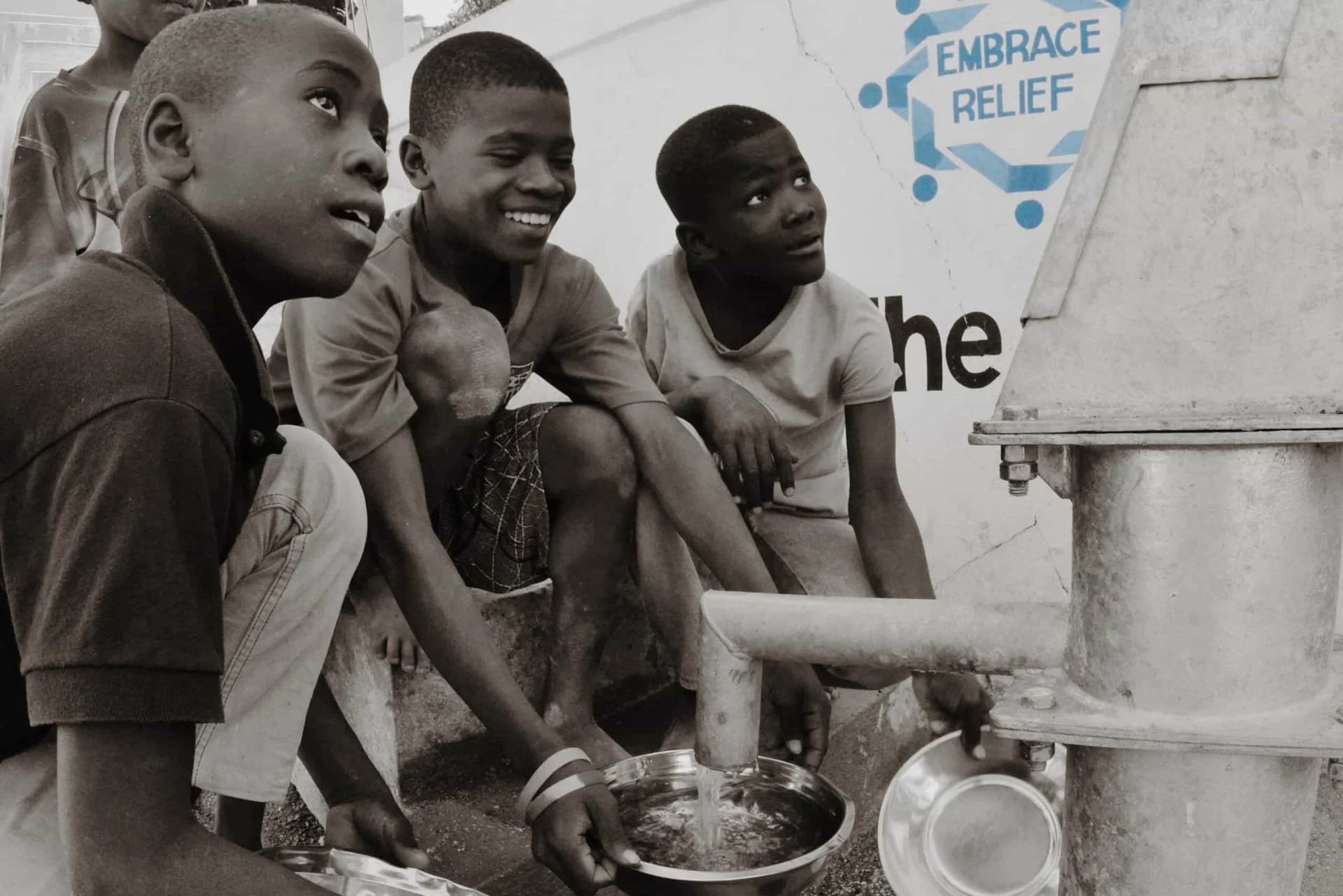
Embrace Relief has built 409 wells since 2013, supplying clean water to 400,000 people daily in Chad, Nigeria, and Cameroon.
The Impact of Water Scarcity
The current water crisis in Africa stems from lack of access to clean, sanitary water, particularly in the sub-Saharan region. Unfortunately, millions of people in Africa spend up to six hours every single day collecting unsafe water from lakes, rivers, and ponds, causing them to become infected with waterborne illnesses that either result in death or make them too sick to work or pursue an education. Even just spending all that time obtaining water exposes people to highly dangerous weather conditions and steals valuable time they could be using to work or pursue an education. This in turn leads to the extreme poverty that exists throughout Africa. So, what exactly is causing the water problem in Africa?
Factors Causing Water Issues in Africa
The physical lack of clean water in the natural environment. This affects countries in northern and southern Africa the most. For example, of the 980 large dams in sub-Saharan Africa, around 589 are located in South Africa. However, only two are located in Tanzania, a country of similar landmass and population, greatly impacting the country’s water scarcity.
The lack of economic means to provide access to clean water to Africa. In this situation, the country or region lacks the ability to invest or repair water infrastructure to provide sanitary water for the community, even in areas where freshwater is abundantly available. This is especially unfortunate in cities and regions where the population is growing; therefore, the demand for clean water keeps increasing.
Social relations between different groups of people. For example, some people struggle to access clean water in Africa because they have no or low income, live in a poor neighborhood, are refugees, women, or because the majority of the people in that community belong to a particular political party, etc.
Natural disasters such as floods and drought. Floods contaminate drinking water and destroy hygiene and wastewater systems, whereas droughts create food insecurity that leads to malnutrition and denies communities water supplies. Also, in sub-Saharan Africa, 66% of people—i.e., 300 million—live in areas with little to no rainfall, which greatly negatively impacts agriculture.
How Embrace Relief Combats the Water Issue
Fortunately, Africa houses a substantial amount of clean water underground, possibly 20 times more than the 8,000 miles of visible water in its lakes and ponds. And because the vast majority of problems regarding water pollution in Africa can be solved simply by providing access to clean, sanitary water, Embrace Relief has decided to both build and reconstruct currently non-operational water wells.
What We Have Accomplished
Since 2013, Embrace Relief has built 409 Africa water wells throughout sub-Saharan Africa, supplying clean water to 400,000 people on a daily basis. Plus, we monitor each well up to five years after construction to ensure they’re operating effectively. Our top three Clean Water Project locations so far are:
- Chad Clean Water
- Nigeria Clean Water
- Cameroon Clean Water
We plan on building and refurbishing hundreds more wells throughout the region, too. So, please consider donating today (or starting your own Water Well for Africa project) so thousands of vulnerable people in Africa not only survive, but thrive and lift their communities out of poverty. Together, we can drastically reduce water scarcity in Africa!