
What Are The Different Types of Cataracts?
Cataracts are a leading cause of preventable blindness worldwide, with nuclear, cortical, and posterior subcapsular being the three main types. Understanding the causes and symptoms of each type is crucial for early detection and treatment through surgery.
By Embrace Relief Team
The useful part before the long read.
The three main types of cataracts are nuclear, cortical, and posterior subcapsular, each affecting different parts of the lens.
Cataract surgery is the only effective treatment, involving the removal of the cloudy lens and replacement with an artificial one.
Risk factors include aging, diabetes, genetics, trauma, radiation exposure, and long-term steroid use.
Embrace Relief has supported more than 42,500 free cataract surgeries; $120 sponsors one surgery in rural Mali.
Understanding Cataracts
A cataract is a progressive eye disease that begins with cloudy or blurry vision, leading to complete blindness if not treated. Although cataracts are highly treatable with surgery, they remain a leading cause of blindness worldwide, affecting millions of people every day.
It’s important to maintain your eye health, to be aware of the signs and symptoms of cataracts, and know the different types of cataracts and what causes them, in order to protect your eyesight.
1. Nuclear Cataract
Nuclear cataracts are the most common type of cataracts, primarily affecting the center of the lens, known as the nucleus. Typically developing with age, these cataracts form deep in the central part of the lens and gradually increase, causing the lens to become yellow or brown. As they progress, nuclear cataracts can significantly impact both near and distance vision. They can alter the power of the natural lens, leading to more frequent changes in your glasses prescription.
The primary cause of nuclear cataracts is the natural aging process, where proteins within the eye’s lens break down and clump together, resulting in cloudiness and yellowing. Additional risk factors include diabetes, genetics, and smoking. Common symptoms include blurred or dim vision, glare, visual distortion, and changes in near or far-sightedness. The progression of nuclear cataracts varies depending on genetics, overall eye health, and lifestyle.
2. Cortical Cataract
Cortical cataracts develop on the lens cortex, the outer edge of the lens, and often start as whitish, wedge-like opacities that progress inward. They may cause halos around lights and begin at the edge of the lens, gradually moving towards the center in a spoke-like manner. This progression can lead to significant vision impairment, particularly affecting contrast and color perception, and can cause problems with night vision.
Cortical cataracts are commonly caused by factors such as diabetes, aging, and genetics. Symptoms include glare, difficulty with contrast and color perception, blurred vision, and night vision problems. Unlike other types of cataracts, cortical cataracts can develop quite quickly, often within a few months.
3. Posterior Subcapsular Cataract
Posterior subcapsular cataracts develop at the back of the lens, just beneath the lens capsule. These cataracts often progress faster than other types and can significantly impair vision, especially in bright light or during activities such as reading and driving at night. They may also cause halos or glare around lights.
Common causes and risk factors for posterior subcapsular cataracts include long-term use of steroid medications, diabetes, exposure to radiation, and extreme near-sightedness. Symptoms typically include blurred vision, difficulty with vision in bright light, and issues with night-time activities.
Other Types of Cataracts
- Congenital Cataract
Children can be born with cataracts or develop it very early in childhood.Congenital cataracts, also known as pediatric cataracts, can be hereditary, caused by an infection, or metabolic problems (e.g. malnutrition) during pregnancy. Early detection and treatment are imperative in cases of congenital cataract, in order to avoid subsequent vision problems like amblyopia (lazy eye). - Traumatic Cataract
Trauma to the head or eye(s) can cause cataracts to form weeks or even years after the incident. - Radiation Cataract
Extensive exposure to radiation, such as chemicals or cancer treatment, and ultraviolet (UV) rays can cause cataracts. - Age-Related Cataract
Cataracts are more likely to form naturally as a person ages. However, a person is more prone to developing cataracts if they:- Smoke
- Drink alcohol in excess
- Have a family history of cataracts
- Have diabetes
- Have certain eye surgeries like for glaucoma or scarring from a previous cataract surgery
- Take steroids from certain medications for arthritis or allergies
How You Can Help Those Suffering From Cataracts
Although cataract surgery is one of the safest and most widespread surgeries worldwide, cataract causes distance vision impairment or blindness for 94 million people, and 1 in 2 people who need cataract surgery cannot access it (WHO, 2026). In many communities in countries such as Mali and Burkina Faso, access to basic and essential healthcare services, including ophthalmology, is severely limited. The primary causes of cataracts in sub-Saharan Africa include nuclear, congenital, traumatic, and radiation cataracts.

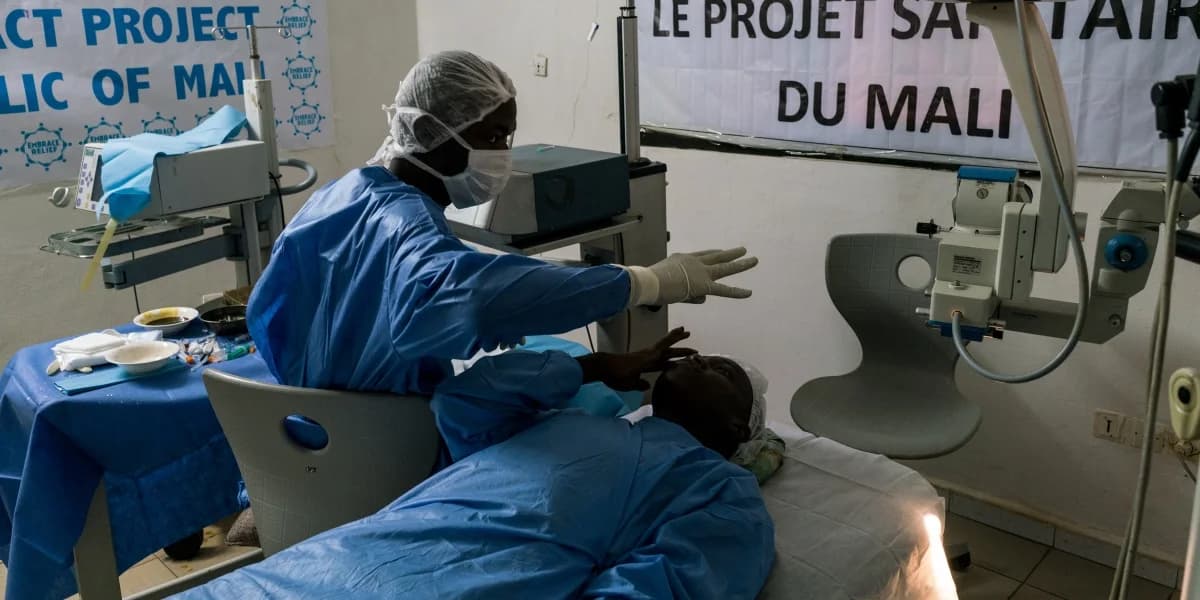
Embrace Relief is dedicated to addressing global health inequality by supporting clinics and hospitals with medical supplies and equipment, sponsoring cataract surgeries, and providing preventative health screenings.
To date, we’ve provided more than 42,500 cataract surgeries, free of charge, to people who otherwise might not be able to afford them. And with the click of a button, you can help us spread joy and positive change by donating $120 for 1 cataract surgery, or choose $240 or $600 to support multiple surgeries.
Donate today to Embrace Relief’s Cure Cataracts program. By giving the gift of sight, you’ll make a priceless, life-changing impact on a person in need.
Related reading
Frequently asked questions
What is the most common type of cataract?
Nuclear cataract is the most common type. It forms in the center of the lens, usually with age, and gradually turns the lens yellow or brown, affecting both near and distance vision.
Which type of cataract progresses fastest?
Posterior subcapsular cataracts often progress faster than other types. Cortical cataracts can also develop within a few months.
Can cataracts be treated without surgery?
No. Glasses or brighter lighting may help with early symptoms, but surgery that replaces the cloudy lens with an artificial lens is the only definitive treatment.
How much does it cost to sponsor a cataract surgery in Africa?
Through Embrace Relief, $120 sponsors one cataract surgery in rural Mali at no cost to the patient. Read the full cost guide for what the sponsorship covers.