What is water scarcity?
Water scarcity affects billions globally due to availability issues or lack of infrastructure. Embrace Relief is combating this crisis in sub-Saharan Africa through well construction and community initiatives.
The useful part before the long read.
1.1 billion people worldwide lack reliable access to clean water.
Water scarcity is categorized into scarcity in availability and scarcity in access.
In sub-Saharan Africa, lack of infrastructure is the primary cause of water scarcity.
Embrace Relief has funded 450 new wells and reconstructed 50 existing ones in Africa.
The Global Water Crisis
- Currently, an estimated 1.1 billion people worldwide lack reliable access to clean water.
- An estimated 2.7 billion people live with water scarcity for at least one month out of the year.
- Additionally, 2.4 billion people have inadequate access to hygiene and sanitation.
- But as staggering as these numbers are, they may be poised to rise significantly higher during the next several decades as climate change impacts weather patterns and water sources.
Types of Water Scarcity
There are two main types of water scarcity:
1) Scarcity in availability: In which there is a shortage in the freshwater supply (rivers, lakes, aquifers, oases, glaciers, reservoirs, ponds, streams, wetlands, etc.) due to drought, overuse, or some other physical cause; and
2) Scarcity in access: In which the clean water supply is plentiful enough, but there are either institutional failures or a lack of adequate infrastructure to extract and distribute this water equitably to all people.
Water Scarcity in Sub-Saharan Africa
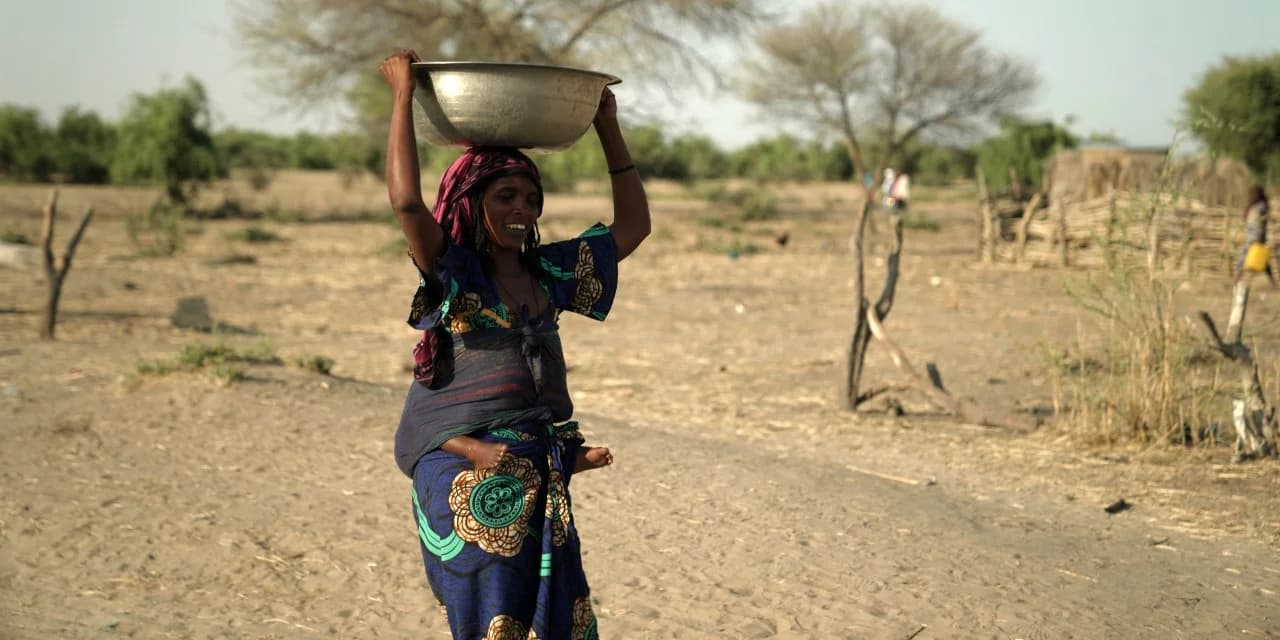
In sub-Saharan Africa, where an estimated 400 million people live with water scarcity, it is this second type of scarcity that is most common. For many, the nearest water source is an unprotected lake, river or pond full of bacteria and worms; drinking this water means putting oneself at risk for deadly diseases. And for many others, the nearest water source requires a significant daily journey on foot, usually undertaken by women and young girls; this means precious hours spent collecting water rather than attending school, working, or taking care of family.
Help Embrace Relief Fight to End Water Scarcity
At Embrace Relief, we’re working to build up the infrastructure of sub-Saharan Africa and make clean water accessible to all, and we need your help.
Through our Clean Water Initiative, we have funded the construction of 450 new water wells, and the reconstruction of 50 pre-existing water wells, in the African nations of Cameroon, Chad and Nigeria. These wells are providing water to more than 500,000 people for at least the next five years.
Donating to Embrace Relief’s Clean Water Fund and our “Fountains of Hope” project is the single-best way to ensure that thousands of people will get the water they need.
Join the H2Ow Far Can You Walk 5K Walkathon
But there are more ways for you to help Embrace Relief fight the clean water crisis. On Saturday, June 25, we will be hosting our inaugural H2Ow Far Can You Walk: 5K Walkathon at Liberty State Park in New Jersey. This family-friendly event is open to people of all ages and abilities, and will help raise awareness and money for building and rebuilding water wells in Africa.
Every dollar donated during our 5K Walkathon will provide more than 2,000 gallons of clean, drinkable water for those in need. For more information, and to register, click here. We look forward to having some fun in the sun with you as we help improve hundreds of thousands of lives.